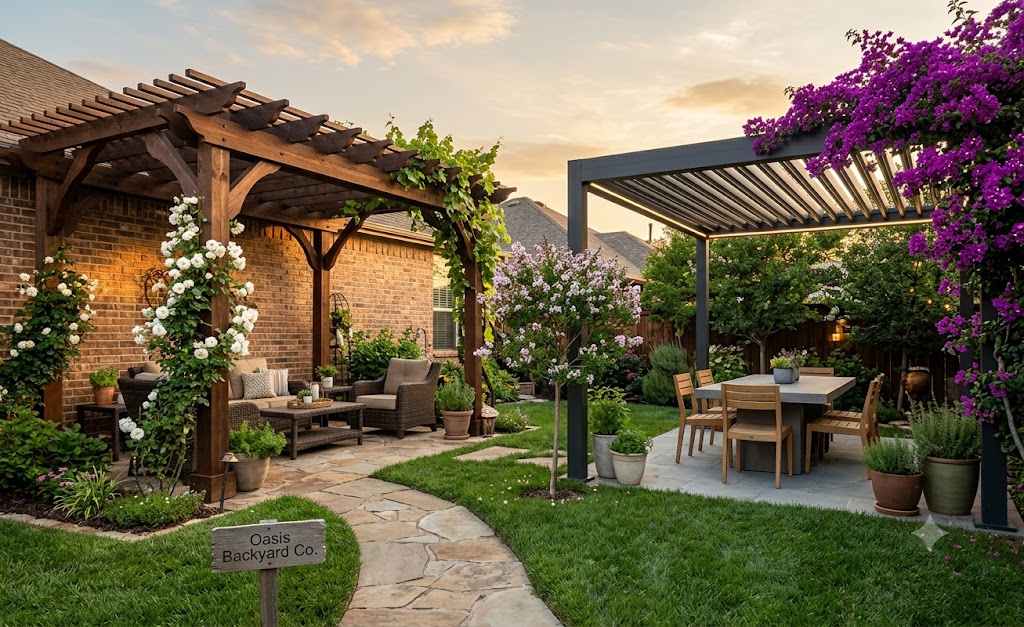
A pergola can transform your backyard from a plain yard into an outdoor living room — but with so many types, materials, and sizes available, choosing the right one can feel overwhelming. Here's everything you need to know to pick the perfect pergola for your space.
If you've ever looked at a beautifully designed backyard and thought "that looks like an actual room outside," chances are a pergola was doing the heavy lifting. Pergolas create structure, define zones, and provide shade — three things that turn an ordinary patio into a space you actually want to spend time in.
But not all pergolas are created equal, and the wrong one can look out of place, block too much (or too little) light, or fail to hold up in your climate. This guide walks you through every decision so you choose a pergola you'll love for years.
Why a Pergola? What It Actually Does for Your Space
Before diving into types and materials, let's talk about why a pergola is usually the single best investment you can make in your outdoor space:
- Creates a defined "room": Open yards feel unfinished. A pergola overhead instantly frames a space — dining area, lounge, kitchen — and makes it feel intentional and designed.
- Provides shade: In Sun Belt states (Arizona, Texas, Florida, SoCal), your patio is unusable without shade from May to October. A pergola solves that.
- Increases home value: Outdoor living upgrades are consistently among the highest-ROI home improvements. A quality pergola can return 50–80% of its cost at resale.
- Anchors your furniture: Outdoor furniture under a pergola looks intentional. The same furniture on an open patio looks temporary.
- Supports lighting and fans: Hanging string lights, pendant lights, or an outdoor ceiling fan from a pergola changes the vibe entirely — especially at night.
If you're building an outdoor kitchen, fire pit lounge, or seating area, a pergola above it is what ties the whole thing together.
Step 1: Attached vs. Freestanding
This is the first decision, and it depends on where you want the pergola and how your home is laid out.
Attached Pergola
Mounts directly to your house and extends outward over a patio or deck. One side is anchored to the home's wall or fascia; the other side is supported by posts.
- Best for: Extending your living space directly off the house — think outdoor dining room or kitchen right off the back door
- Pros: Seamless indoor-outdoor flow, structurally supported by the house, easier to run electrical for fans and lights
- Cons: Requires proper mounting into the house structure (not just siding). May need a permit depending on your area
Freestanding Pergola
Stands on its own with 4+ posts, placed anywhere in the yard. Not connected to the house.
- Best for: Creating a separate retreat zone — a fire pit lounge in the middle of the yard, a pool cabana, or a garden seating area
- Pros: Flexible placement, no house modifications, can go over any surface
- Cons: Needs solid footings (concrete pads or post anchors), slightly more material and cost
Pro tip: If you want the pergola to feel like an extension of your home, go attached. If you want a separate destination in the yard — like a lounge you walk out to — go freestanding.
Step 2: Choose Your Material
The material determines how your pergola looks, how long it lasts, and how much maintenance you'll deal with. Here's an honest breakdown:
Aluminum
- Look: Modern, sleek, clean lines. Available in black, white, gray, bronze, and wood-grain finishes.
- Durability: Rust-proof, rot-proof, insect-proof. Handles extreme heat, rain, snow, and salt air. Essentially maintenance-free.
- Best for: Hot/humid climates, coastal areas, modern and contemporary homes.
- Maintenance: Hose it off once a year. That's it.
- Budget: $4,000–$20,000+ depending on size and features.
Wood (Cedar or Redwood)
- Look: Warm, natural, classic. Perfect for rustic, farmhouse, or traditional aesthetics.
- Durability: Cedar and redwood are naturally rot-resistant, but will weather to gray over time without treatment. Can last 15–25 years with regular staining/sealing.
- Best for: Traditional homes, garden settings, anyone who loves the look and feel of natural wood.
- Maintenance: Stain or seal every 2–3 years. Inspect annually for splitting or warping.
- Budget: $3,000–$15,000+ depending on wood species and size.
Vinyl
- Look: Clean, white or light colors. Classic aesthetic similar to white fencing.
- Durability: Won't rot, rust, or need painting. UV-stabilized vinyl resists fading. Good for 20+ years.
- Best for: Low-maintenance seekers, coastal and humid climates, traditional white-trim homes.
- Maintenance: Virtually none — wash with soap and water.
- Budget: $3,000–$10,000.
Steel
- Look: Industrial, bold, structural. Great for modern or industrial-style homes.
- Durability: Extremely strong. Must be powder-coated or galvanized to prevent rust.
- Best for: Dry climates, industrial/modern aesthetics, heavy snow load areas.
- Maintenance: Check coating annually, touch up scratches to prevent rust.
- Budget: $5,000–$15,000+ (often custom fabricated).
👉 Browse Pergolas & Shade Structures
Step 3: Roof Style — How Much Shade Do You Need?
This is where most people get tripped up. The roof style determines how much sun gets through — and that depends entirely on your climate and preference.
Open Slat / Traditional
Classic pergola look with evenly spaced rafters (no solid roof). Provides partial, dappled shade — think 40–60% shade depending on slat spacing and sun angle.
- Best for: Mild climates, anyone who wants filtered light (not full shade), garden aesthetics
- Add shade with: Climbing vines (wisteria, jasmine, bougainvillea), shade sails, or retractable canopies
Louvered
Adjustable slats that rotate from fully open (maximum sun) to fully closed (complete shade and rain protection). The premium option.
- Best for: Hot climates where you need full shade control, anyone who wants a year-round outdoor room
- Key feature: Motorized models close automatically when rain sensors detect water — your furniture stays dry even if you're not home
- Budget premium: $8,000–$30,000+ but worth every penny in Sun Belt states
Solid Roof / Insulated
A fully covered roof (like a patio cover). Provides 100% shade and full rain/weather protection.
- Best for: Areas with heavy rain, anyone who wants a fully weatherproof outdoor room
- Downside: No option to let sun through on nice days — it's always covered
Pro tip: If you live anywhere with serious summer heat, a louvered pergola is the best investment. You get full shade when you need it, full sun when you want it, and rain protection year-round. It's the most versatile option by far.
Step 4: Size It Right
Getting the size right is critical. Too small and it feels cramped; too large and it overwhelms the space or blocks sight lines.
General sizing guidelines:
- Dining area: Allow the pergola to extend at least 3 feet beyond the table on all sides. A 6-person dining set needs roughly a 12×12 ft pergola.
- Lounge/seating area: A 10×10 ft pergola covers a conversation set comfortably. For a sectional, go 12×14 ft or larger.
- Outdoor kitchen: Cover the entire cooking and prep area plus 2–3 feet of buffer. Typical range: 10×14 to 14×20 ft.
- Height: Standard is 8–10 feet at the lowest point. Go higher (10–12 ft) for attached pergolas on two-story homes so the proportions look right.
Pro tip: When in doubt, go slightly larger. A pergola that's a bit bigger than needed looks generous and intentional. One that's too small looks like an afterthought.
Step 5: Think About Add-Ons
The right accessories transform a pergola from a shade structure into a fully functional outdoor room:
- String lights or pendant lights: The single biggest ambiance upgrade. Warm white string lights draped across the rafters create instant magic at night.
- Outdoor ceiling fan: If your climate is hot, a fan under the pergola moves air and drops the perceived temperature by 5–10°F.
- Privacy screens or curtains: Side panels or outdoor curtains add wind protection, shade, and privacy from neighbors.
- Climbing plants: For open-slat pergolas, train vines (wisteria, jasmine, grapevine) along the rafters for natural shade that gets better every year.
- Heaters: Wall-mounted or ceiling-mounted electric heaters extend your pergola season deep into winter.
Climate Guide: Best Pergola for Your Region
- Southwest / Desert (AZ, NV, NM): Aluminum + louvered roof. Heat is your enemy — you need maximum shade control and zero maintenance in extreme sun.
- Southeast / Gulf (FL, TX, LA, GA): Aluminum or vinyl + louvered or solid roof. Humidity and rain mean wood rots fast. Go rust-proof and rain-ready.
- Pacific Coast (CA, OR, WA): Any material works. Mild climate is forgiving. Wood looks beautiful here and lasts longer than in humid regions.
- Northeast / Midwest: Aluminum or treated wood. Must handle snow loads — check weight ratings. Louvered roofs shed snow when opened.
- Mountain / High Altitude: Steel or aluminum for strength. Heavy snow loads require strong construction. Avoid vinyl in extreme cold (it can become brittle).
Sample Setups by Budget
The Starter ($3K–$6K)
10×10 ft aluminum or vinyl pergola with open slats + string lights + shade sail for extra coverage. Clean, simple, and instantly elevates a basic patio.
The Upgrade ($8K–$15K)
12×14 ft louvered aluminum pergola (motorized) + ceiling fan + integrated LED lighting + outdoor curtains on one side. A true outdoor room that works rain or shine.
The Premium ($15K–$30K+)
14×20 ft motorized louvered pergola with rain sensors + integrated speakers + heaters + pendant lighting + privacy screens. The full resort experience in your backyard. Covers your outdoor kitchen and dining area in one sweep.
👉 Shop Pergolas & Shade Structures
Tips Before You Buy
- Check your HOA and local codes — many communities have rules on pergola height, setback from property lines, and materials. Attached pergolas often require a building permit.
- Know your wind and snow loads — if you're in a hurricane zone or heavy snow area, make sure the pergola is rated for it. Wind ratings of 90+ mph are available in premium aluminum models.
- Plan for electrical — if you want fans, lights, heaters, or a motorized roof, run electrical to the pergola location during installation. Retrofitting is more expensive.
- Consider the sun path — east-west orientation gives you shade during the hottest midday hours. Know where the sun hits your patio before you commit to placement.
- Buy quality once — a cheap pergola that warps, fades, or rusts in 3 years costs more than a premium one that lasts 20+. This is the anchor of your outdoor space — invest accordingly.
Your Perfect Pergola Is Out There
Choosing a pergola comes down to four things: your climate, your aesthetic, your budget, and how you want to use the space. Start with those answers and the right choice becomes clear.
If you're in a hot climate, a louvered aluminum pergola is almost always the best bet. If you love natural warmth and don't mind some upkeep, cedar or redwood is gorgeous. If you want set-it-and-forget-it with a clean look, vinyl is hard to beat. And if you want the strongest structure possible, steel delivers.
Whatever you choose, a pergola is the single upgrade that makes everything else in your outdoor space look and feel better. It's the foundation — start here.
At Oasis Backyard Co, we carry a curated selection of premium pergolas and shade structures — from compact patio kits to full custom-ready louvered systems. Every product is hand-picked for quality and shipped directly from trusted US brands.
👉 Shop Pergolas & Shade Structures
Browse our collection or reach out at oasisbackyardco@gmail.com — we'll help you find the perfect pergola for your space.
